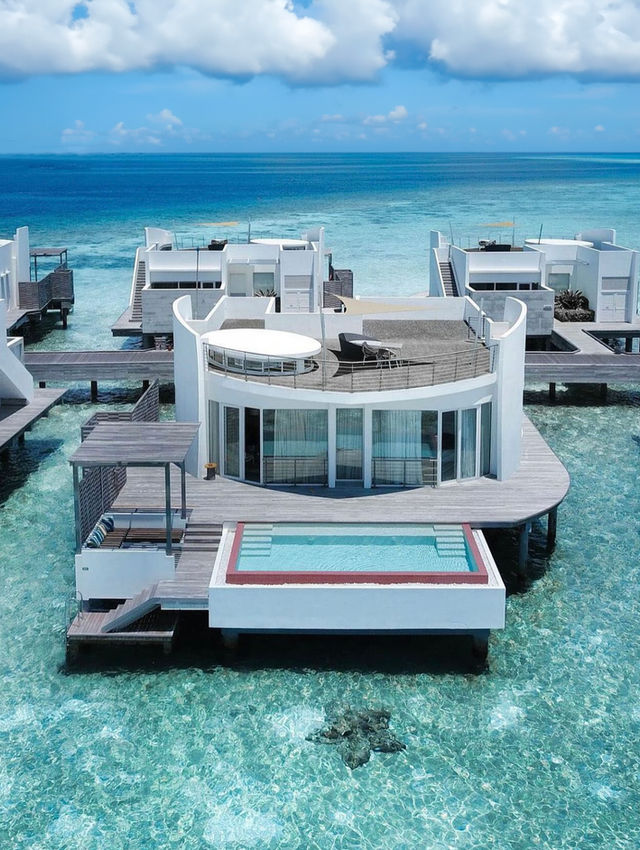
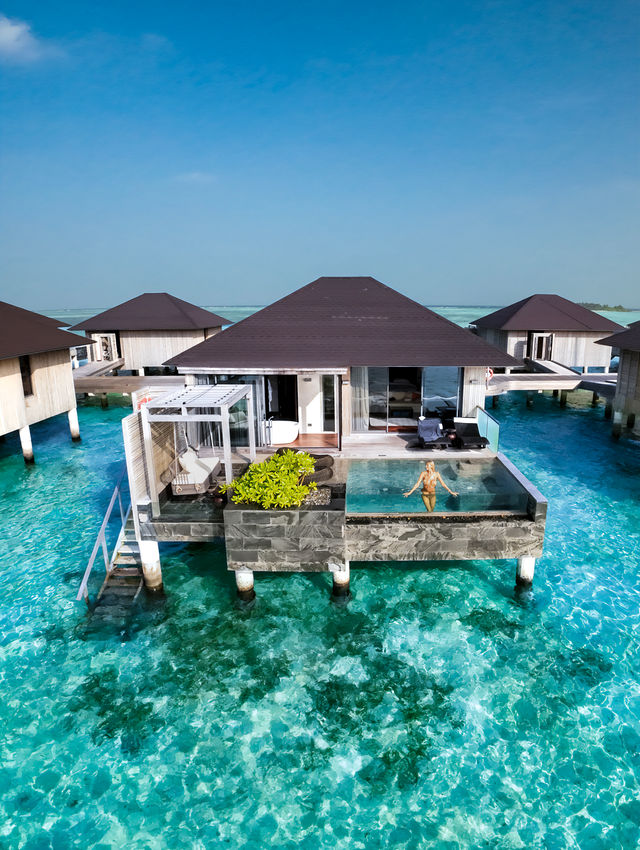
Five stars in the Maldives is not a category. It is a price range that runs from about a thousand euros a night to well past three thousand, and the two ends of it are not the same holiday with different thread counts. We have stayed on islands at both ends, and we have also got it wrong — booked beautifully photographed places that turned out to be the wrong island for the trip we wanted. That is the article I wish we had read first.
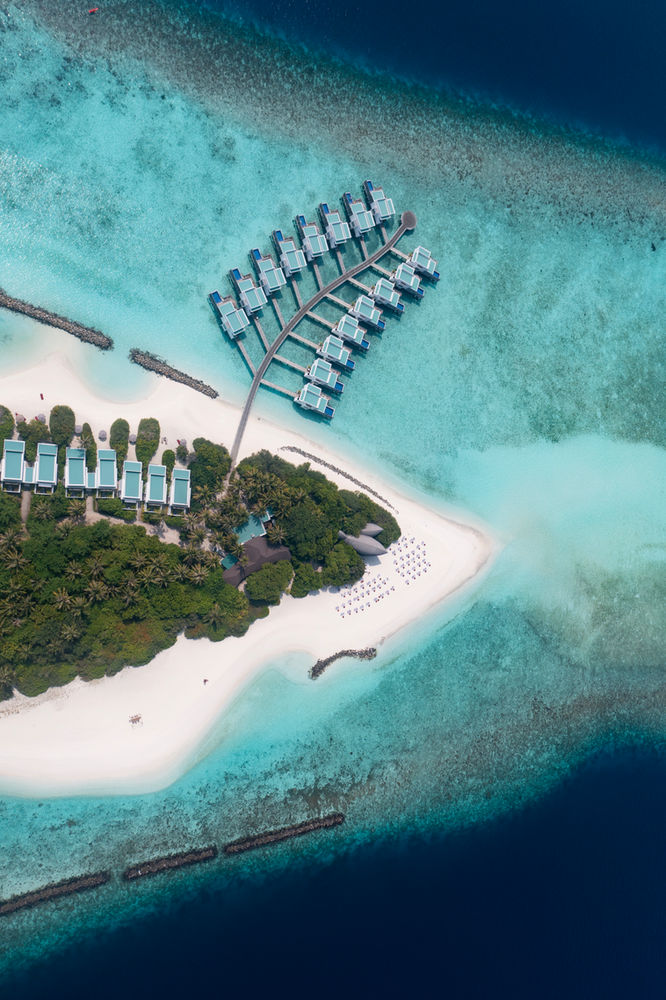
The confusing part is that every one of these resorts is genuinely lovely. The water is the same colour in all the photographs. Nobody is running a bad hotel. The differences hide in things that never make the brochure, and they decide whether you spend a week snorkelling over a living reef or a week walking to a jetty because the coral is a boat ride away.
1. The reef is the first question, not the last
If you go to the Maldives for the sea — snorkelling, diving, turtles, anything with a mask on — the house reef is the single decision that matters most, and it is the one people research last, after villa photos and restaurant lists.
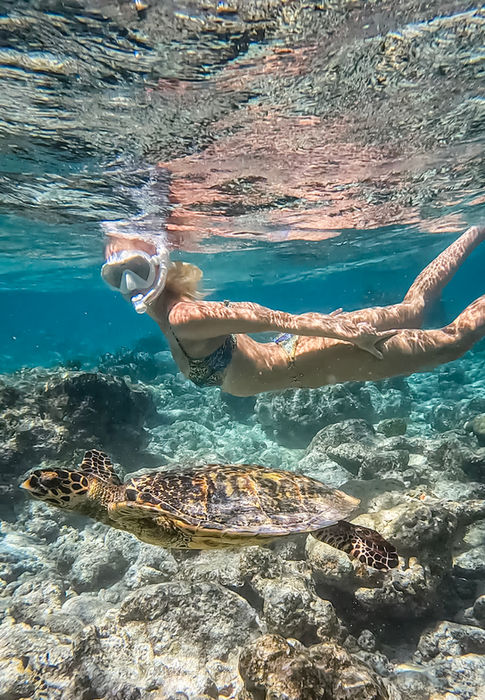
House reef quality varies enormously between islands: published ratings across the archipelago spread roughly from 6.5 to 9.2 out of ten, which in practice is the gap between stepping off your beach into a wall of fish and swimming twenty minutes over sand to find nothing. Some islands sit inside a wide, shallow lagoon with the real reef far offshore — beautiful to look at, but every snorkel becomes a scheduled boat trip with the dive centre.
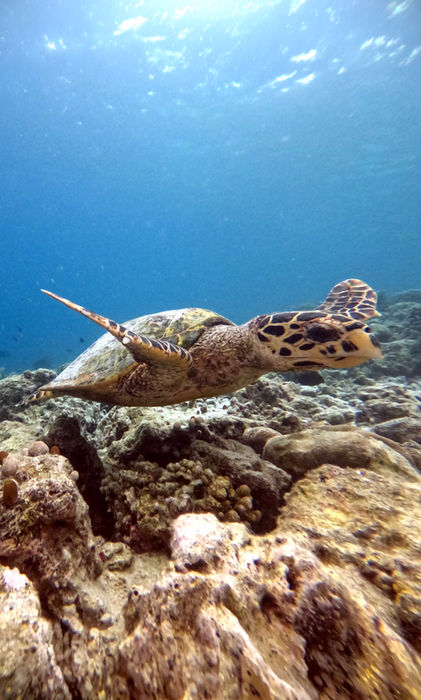
So before anything else: is there a house reef, how far is the drop-off from the beach, and can you swim to it without a boat? A resort that has one will tell you loudly. A resort that does not will show you photographs of a lagoon and use the word 'crystalline' a great deal.
2. Natural island or reclaimed one — and how to tell
This is the difference nobody mentions and, for us, the one that changes the experience most. A number of Maldivian resort islands are not islands in the old sense: they are land reclaimed from a lagoon, dredged and shaped, and the bulk of the fully reclaimed ones are concentrated in the North and South Malé atolls, closest to the airport. Others are half and half — an original island with a new wing extended into the water.
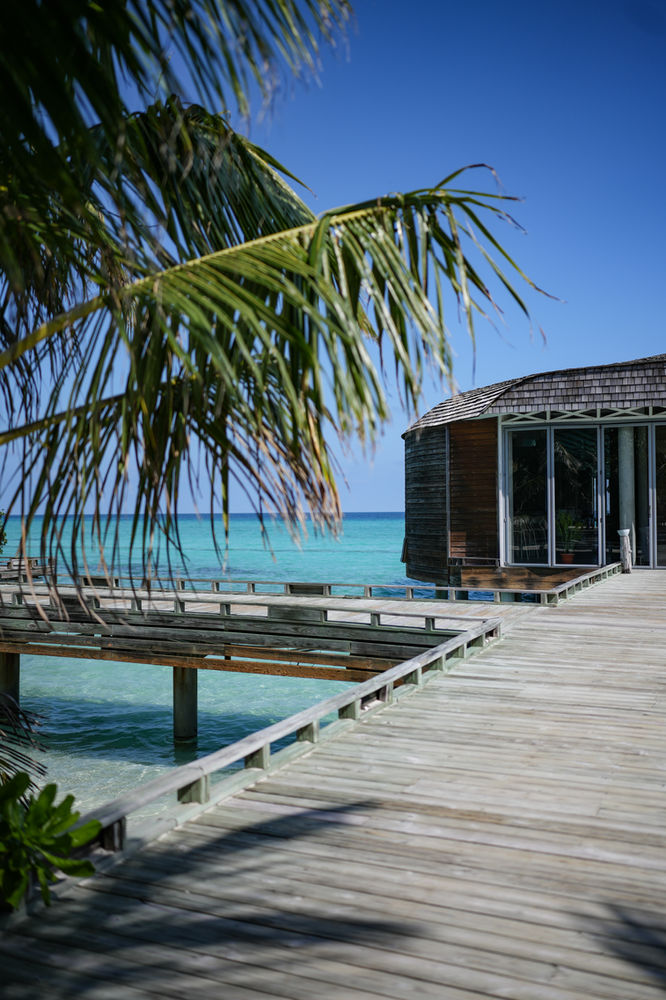
You can see it once you know what to look for. A natural island has thick vegetation, tall old coconut palms, deep shade in the middle of the day and fine soft sand. A reclaimed one has thin planting, short young trees, less shade, and often coarser sand underfoot. And underneath, the part that matters: a reef takes an extremely long time to build itself around new land, so a reclaimed island frequently has no drop-off and much less marine life.

None of this makes a reclaimed island a bad hotel — some of them are spectacular, and they are usually the ones you can reach quickly by speedboat. But if you are coming for nature, the vegetation and the reef are the holiday, not the setting for it.
3. How you arrive is part of what you are buying
Transfers in the Maldives are not a detail, they are a third of the first day and a third of the last. They also cost real money on top of the room: a shared seaplane runs roughly $450 to $800 return per adult, a speedboat $150 to $400.
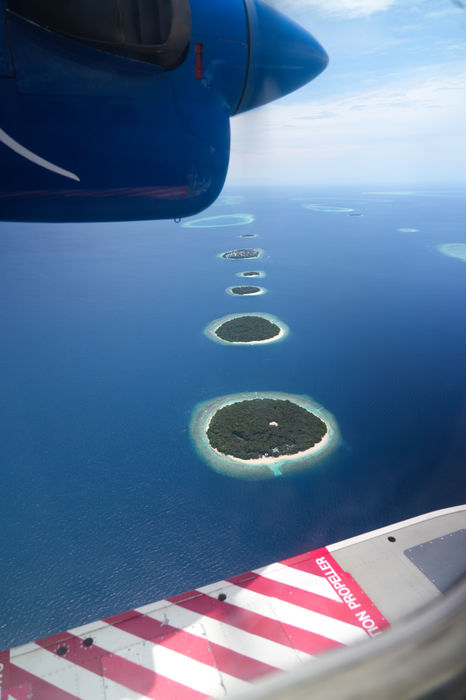
There is a hard rule worth knowing before you book flights. Seaplanes fly under visual rules and are not allowed in the dark: the last departures are around half past three or four in the afternoon. If your flight lands at Malé in the evening and your resort is seaplane-only, you sleep near the airport and fly in the morning — a night of your holiday, gone. Speedboat islands run their own boats around the clock and will collect you at midnight.
Above that, the differences become theatre, and the good kind. At Jumeirah the boat that came for us was a yacht rather than a shuttle. At Anantara we were flown in on their own seaplane, fitted out like a small private aircraft rather than a bus with floats. And every resort at that level keeps its own lounge at Malé airport, so the wait happens in air conditioning with a drink instead of in a departures hall. It sounds like an extra. After a nine-hour flight it is the difference between arriving and surviving.
4. Service: the part you cannot photograph
At the top end you get a butler, and 'butler' turns out to mean a person you can message at any hour who solves things before they become problems. Below that tier, you get a very good front desk. Both are fine. They are not the same.
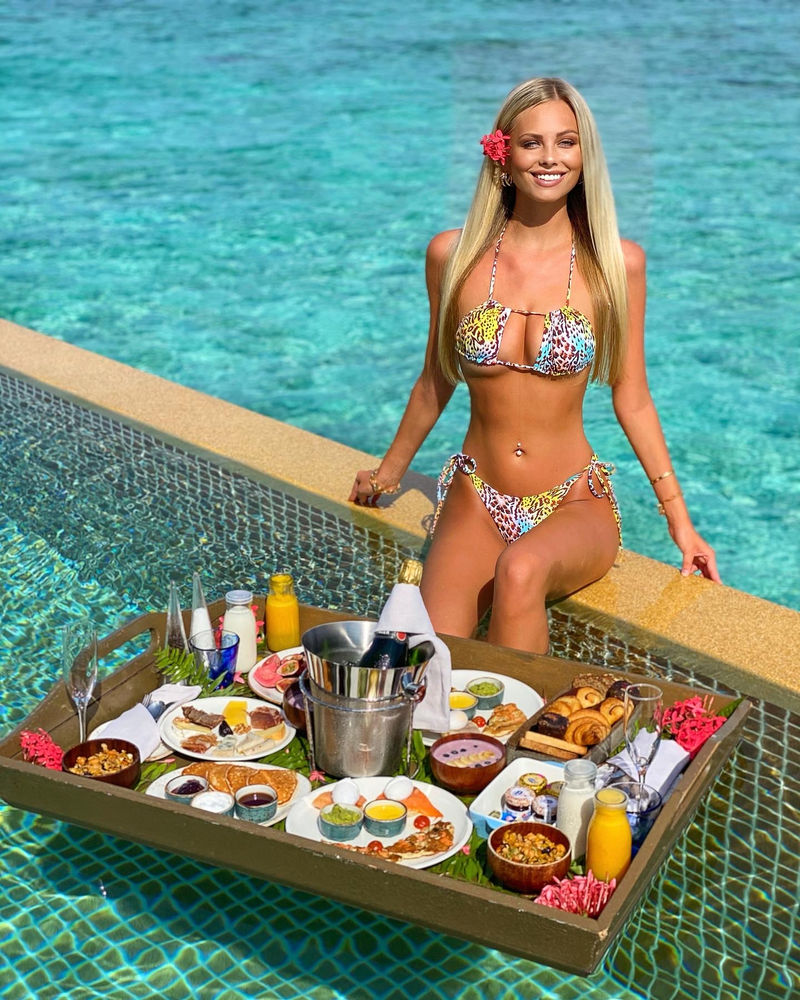
The tell we have learned to watch for is smaller than that. In the resorts that are genuinely worth their price, by day two the staff know your name — all of them, not just the manager — and somebody has already remembered how you take your coffee at breakfast. It cannot be faked with a mission statement; it comes from training, from staff who stay for years rather than months, and from a ratio of people to guests that only shows up on the bill.

5. Food, which is a logistics problem before it is a kitchen one
This is where money is most visible, and the reason is geography. Almost nothing grows on a coral island. Every vegetable, every cut of meat, every wine bottle arrives by boat or by plane, on a schedule, into a country where the cold chain is expensive and fragile.
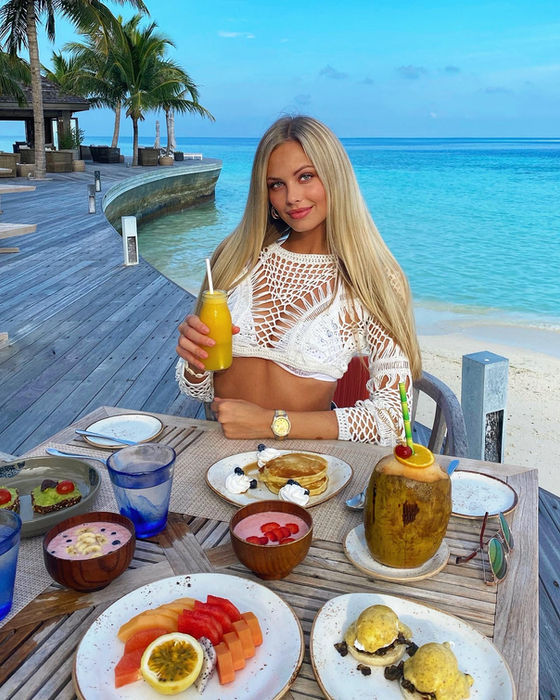
So the resorts that invest in supply are the ones that eat well, and you can measure it at breakfast on the first morning: how many things are fresh rather than frozen, whether the fruit is local and ripe or imported and hard, whether the fish is what came in that morning. By dinner on the second night you already know what tier you are in.
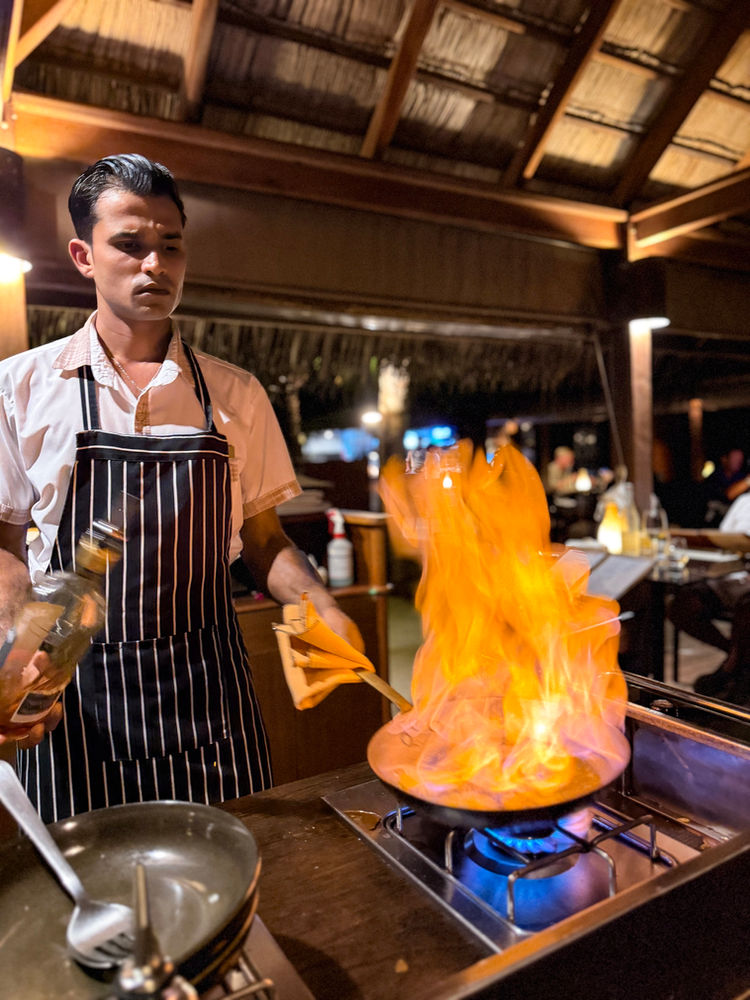
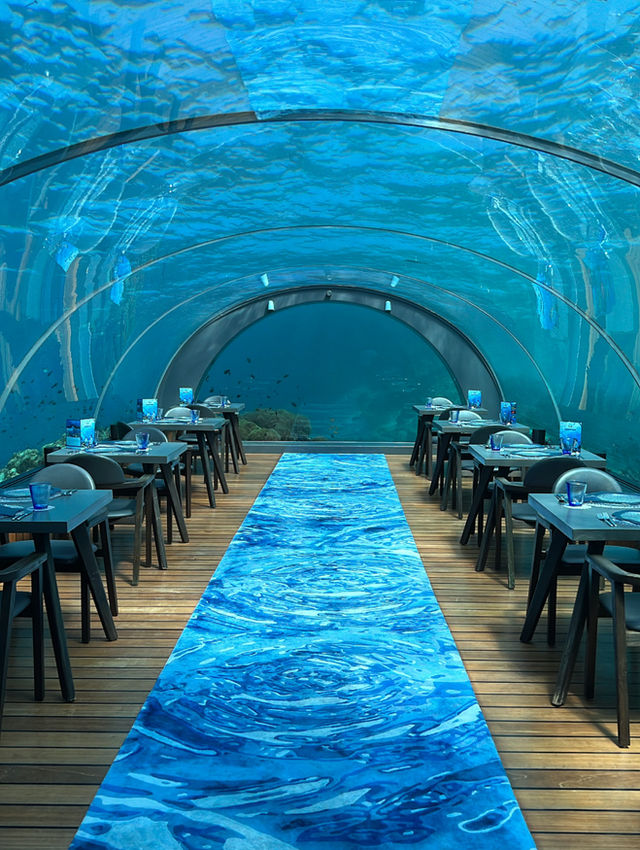
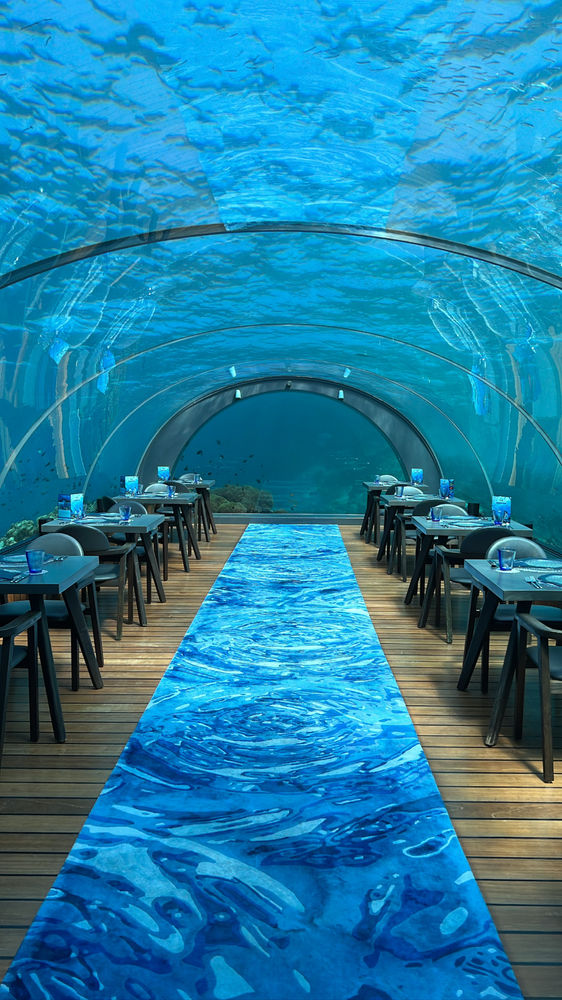
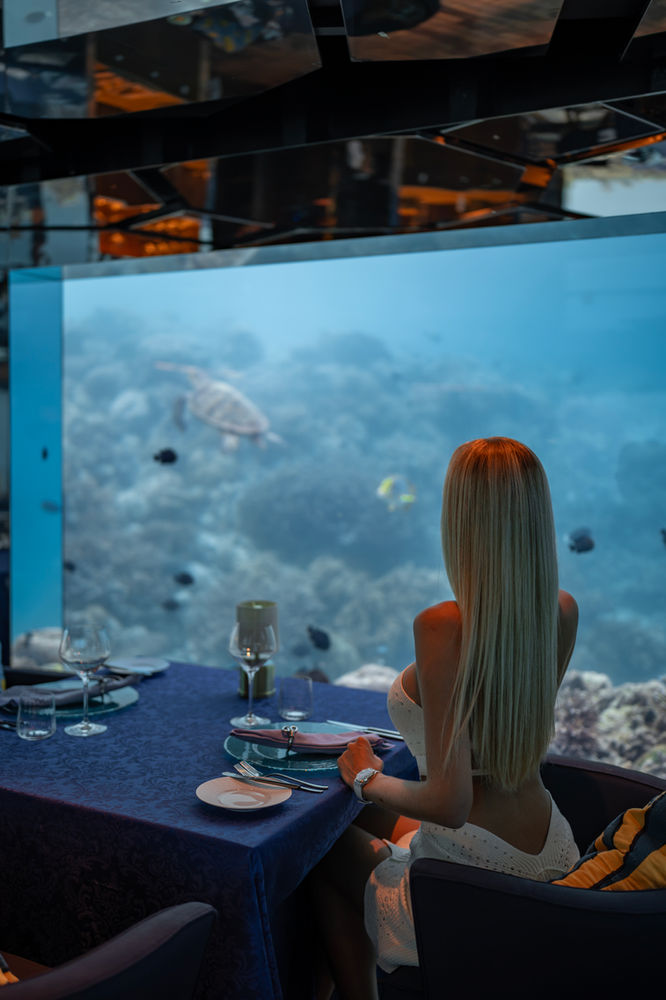
At the very top the kitchens stop being hotel kitchens: proper degustation menus, a wine list with an actual point of view, and rooms built around the food — we have eaten six metres under the lagoon at Ozen's M6m and in the glass tunnel at Hurawalhi's 5.8, and neither was a gimmick with a view attached.
6. What a thousand euros buys, and what three thousand adds
Roughly, and from our own bills rather than from a price list:
- Around €1,000 a night: a beautiful villa, often with a pool, a good buffet plus two or three restaurants, a house reef that may or may not be excellent, speedboat transfer, service that is warm but general. On the right island this is superb value.
- Around €2,000: better reef or a better position on it, kitchens with real ambition, more staff per guest, a personal contact who is genuinely yours, and included activities that would be extras elsewhere.
- €3,000 and up: a butler on call around the clock, ingredients flown in for their own sake, private transfers, and an island run so that you never queue for anything or wait for anyone.
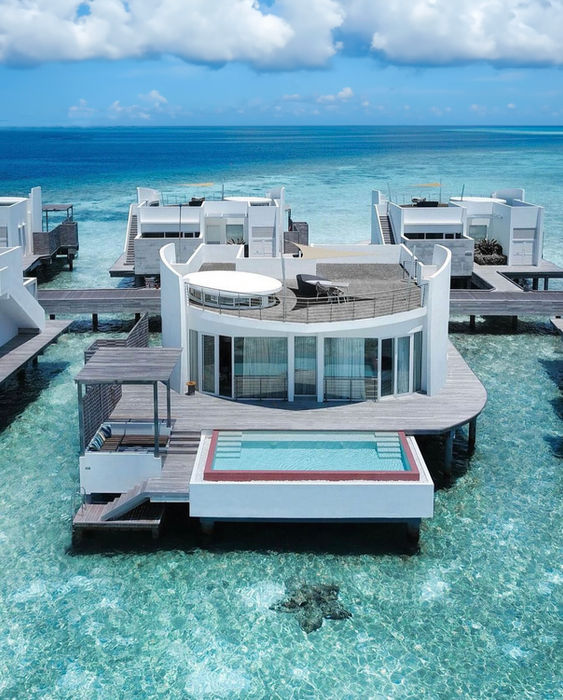
And the trap nobody warns you about: the extras scale with the room rate. A dinner outside the plan, a bottle of wine, a private sandbank picnic, a diving trip, room service at midnight — all of it costs proportionally more at three thousand than at one thousand. Two people who eat and drink well can add a very large number to a bill they thought was already paid. Budget for the extras as a real line, not as a rounding error.
7. The mistakes we made, so you can skip them
- Booking for the villa and not for the island. The villa is where you sleep; the reef and the vegetation are where the week happens.
- Assuming all-inclusive means the same everywhere. On one island it covers the fine-dining restaurants; on another it means the buffet and a house wine you will not finish.
- Not checking the transfer against the flight times, and losing a night to a seaplane curfew.
- Choosing the closest island to the airport because the transfer was cheap, and finding a lagoon with nothing in it.
- Believing photographs of the sand. Every island in the Maldives photographs beautifully. That is the one thing they all have in common.
So, are they all the same?
No — but the price is not a quality score either. A thousand-euro island with a superb house reef will give a snorkeller a better week than a three-thousand-euro island built on reclaimed land, and no amount of butler makes coral appear. What the money buys, reliably, is the parts that are hard: supply, staff, transfers, and the freedom to stop counting. Decide which of those you actually care about, then pay for those.
If you want the short version — house reef, villa type, atoll, island size, board basis — we have a checklist in the Handbook: Choosing a Maldives Island.