The romantic version of the upgrade — dress well, smile at check-in, get moved to the front — belongs to another era of aviation. Today the seat in front of the curtain is inventory, and it is sold, auctioned or awarded by rules. The good news is that the rules are knowable.

The five ways up front
- Buy it outright. Boring, but often less expensive than people assume on routes with weak premium demand.
- Take the airline's paid upgrade offer, which usually arrives by email a few days before departure at a fixed price.
- Bid, where the airline runs an auction on unsold seats and you name a number. Low bids on full flights go nowhere.
- Use points or miles — reliably the best value, and the only method that turns a cheap economy ticket into a genuinely premium trip.
- Status upgrades, automatic or on request, which is why frequent flyers rarely bid at all.
Why the offer never comes
Upgrade offers only exist when there are seats to fill. On routes where business is full of corporate travellers, nothing is offered because nothing is spare. The same airline on a leisure route in low season will chase you with offers for a week.
Fare class matters too. The cheapest economy tickets are often excluded from upgrades entirely, and no amount of asking changes that — the system simply will not show your booking as eligible.
What to do at the airport
Ask once, politely, at check-in, and ask a specific question: whether there is a paid upgrade available and what it costs. That is a transaction the agent can actually process. Asking to be upgraded for free asks them to break a rule, and puts them in an awkward position for nothing.
What you are actually paying for
Before the tactics, the honest question: what does the front of the plane give you that the back does not? Six things, and only one of them is the seat.
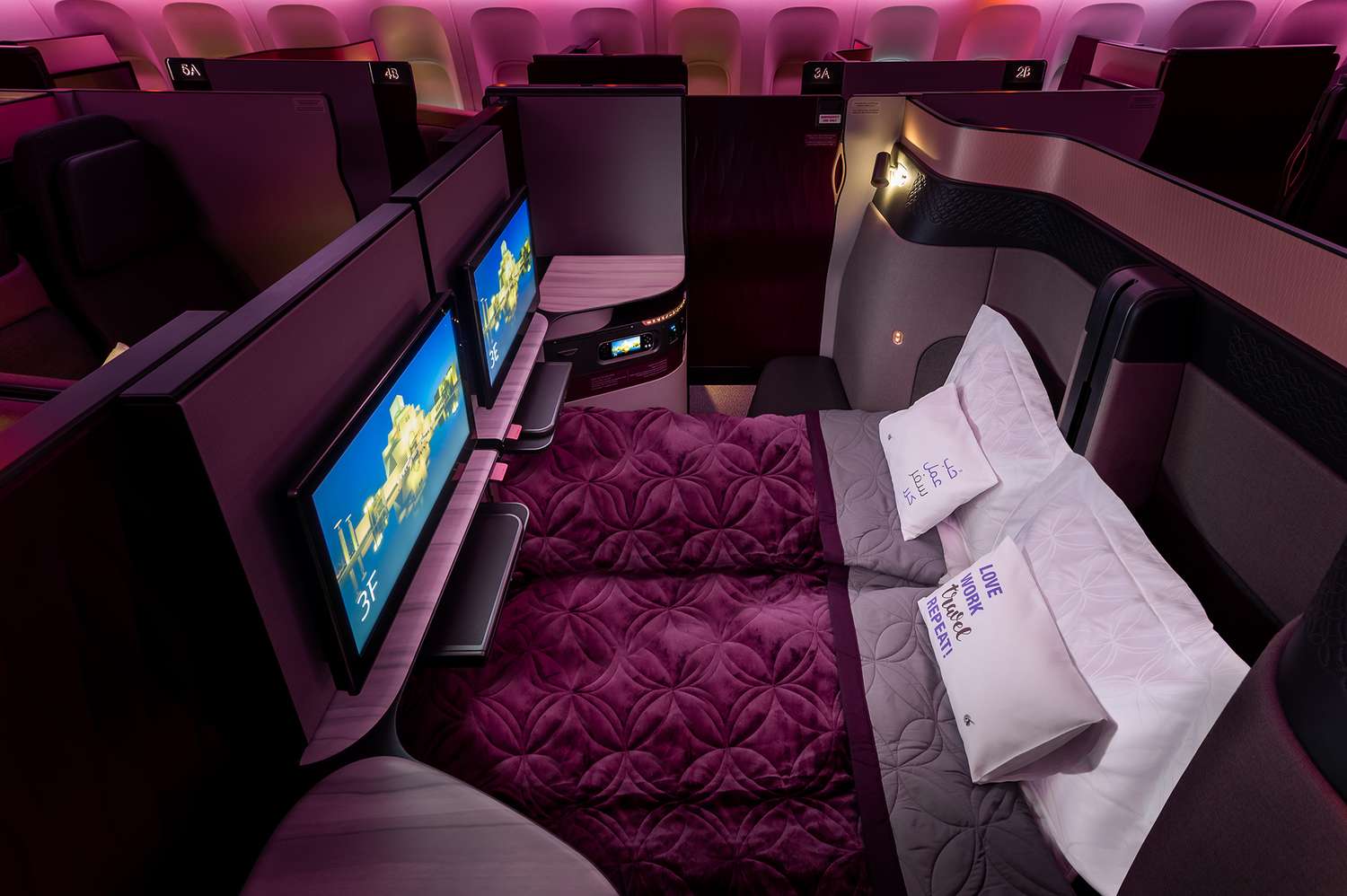
- A bed. A lie-flat seat on a night flight is the difference between sleeping and enduring, and on many aircraft it comes with direct aisle access, so you never climb over a stranger.
- Space that is yours: a suite or a shell with a door or a divider, room to spread out a laptop, and somewhere to put everything you would otherwise hold.
- Food served as a meal rather than handed over. Dine-on-demand on the airlines that offer it means you eat when you are hungry, or skip dinner entirely and sleep through it.
- Priority everything: check-in desk, security lane, boarding, and — the one that actually saves time — your bags first on the belt.
- Lounge access before departure, which turns a long connection from dead time into a shower, a meal and a desk.
- The condition you land in. This is the whole point.
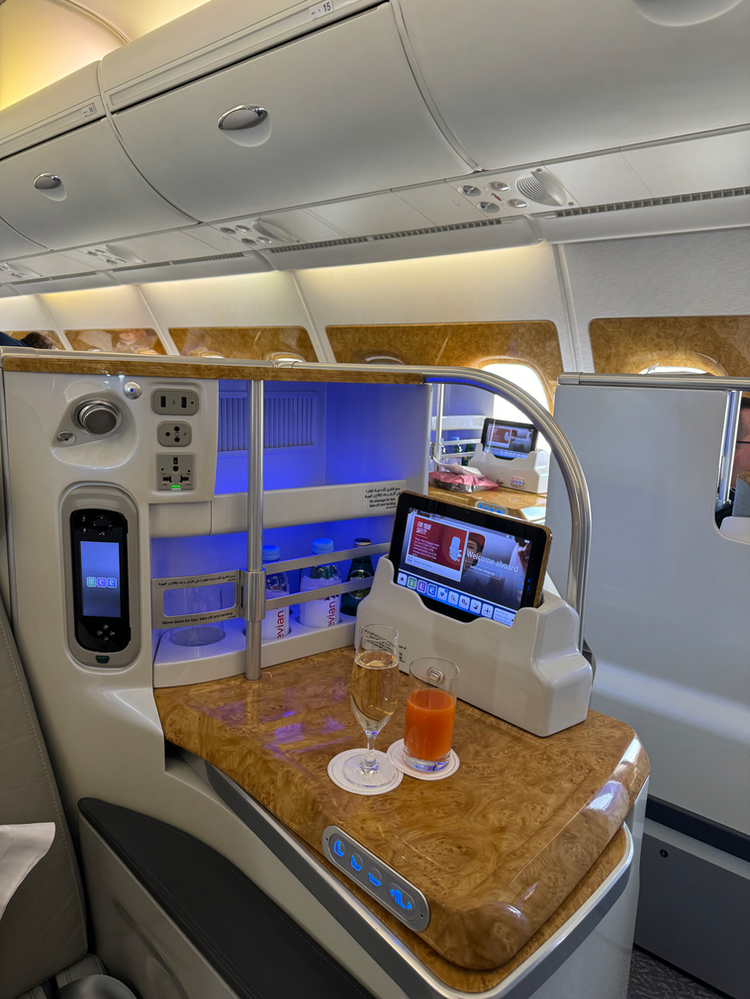
Flying to the Maldives with Emirates we went through all of it in one trip — priority handling at the airport, the lounge before departure, the seat, the dining, and an arrival where we could go straight into the day instead of into a hotel room to recover. That is the case for business class in one sentence: it does not buy a nicer flight, it buys the day after.
Where the value really is
On a seven-hour daytime flight, business class buys you comfort. On a fourteen-hour overnight, it buys you the following day: you land able to work, shoot, or start the holiday instead of losing it to sleep. That is the calculation worth making, and it is why we treat some routes as worth the upgrade and others as not.
One practical rule: decide before the offer arrives. Airlines send upgrade offers precisely when you are least able to think — the night before, mid-packing — and the price is designed to feel small next to the holiday. Work out beforehand what the cabin is worth to you on that particular flight, and the answer becomes easy.