This is the practical half of the three-part story of our American road trip: the route, the car, the bookings that cannot be left to chance, and the things we would do differently. Ten days, 1,645 kilometres, from Las Vegas through Nevada, Utah and Arizona and back to Las Vegas.

The route, stage by stage
The loop below is the one we drove. It works in either direction, but anticlockwise — Zion first, Route 66 last — puts the big landscapes at the start, when you are still fresh, and leaves the easy, cheerful driving for the end.
- Las Vegas → Valley of Fire → Springdale (Zion): 260 km
- Springdale → Page, for Antelope Canyon and Horseshoe Bend: 190 km
- Page → Monument Valley: 200 km
- Monument Valley → Bluff: 75 km
- Bluff → Grand Canyon South Rim, staying at Tusayan: 310 km
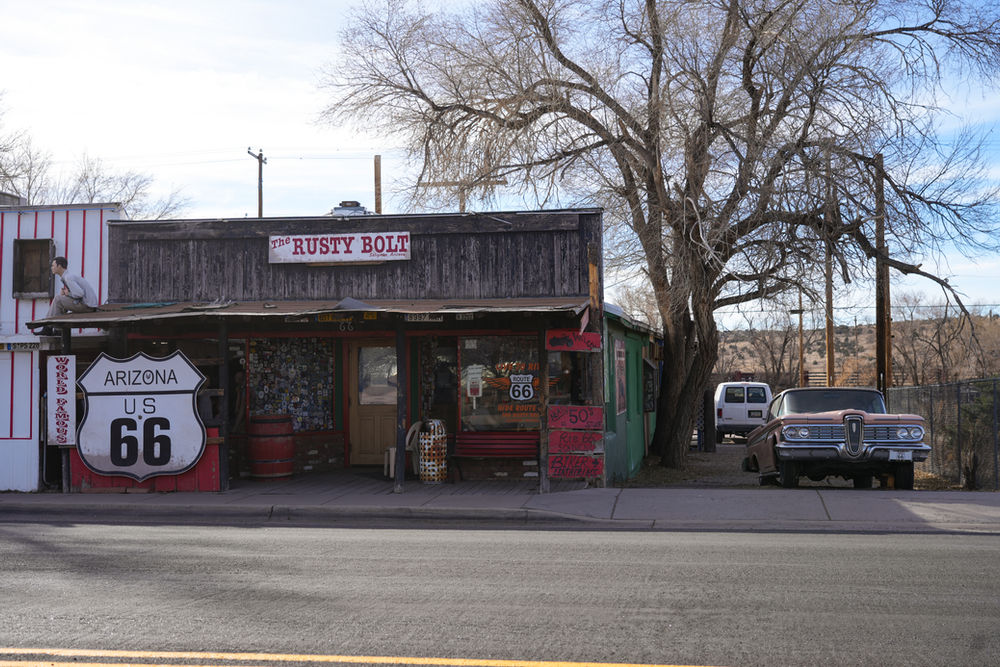
- Tusayan → Williams → Seligman → Hackberry → Oatman → Kingman: 390 km
- Kingman → Red Rock Canyon → Las Vegas: 220 km
- Total: about 1,645 km, not counting the driving inside the parks
Ten days is the right length. Eight would work if you cut Bluff and drove longer days; twelve would let you give Zion the two nights it deserves, which is the single change I would make to our own itinerary.
Renting the car: why we use Turo
We have rented through Turo several times in the United States, and it has been smooth and problem-free every single time. It is not a rental company: it is car sharing, where you book a specific car from the person who owns it. For a road trip that difference is the whole point — you choose the exact car rather than a category, and you know what is waiting for you.

How it works in practice, from our own bookings:
- Book well before you fly: the interesting cars go first, especially over the holidays
- Register any additional driver in the app and wait for approval — it is free, but it is not instant
- Most owners use self check-in: the car is unlocked remotely and the key is inside, so nobody has to meet you
- Check the mileage policy. Ours was unlimited, which for 1,600 km matters
- Note the battery or fuel level at pick-up: you return it at the same level
- Photograph the car before you leave, as you would with any rental
An electric car in the desert: less complicated than it sounds
We drove a Tesla Cybertruck, which was both the most photogenic decision of the trip and the one we were most nervous about. The nerves were unnecessary.
Tesla's charging network covers this route properly, and the car plans the stops itself: you set the destination and it tells you where to charge and for how long. Even in the emptiest section — between Page, Monument Valley and the Grand Canyon, where towns are an hour apart — it was never a problem. The one habit worth adopting is to charge while you are eating or visiting rather than making a separate stop for it; done that way, the charging costs you no time at all.
In winter, expect the range to be shorter than the number on the screen — cold batteries always are — and plan to arrive at each night's stop with more margin than you would in summer.
What has to be booked in advance
Most of this trip can be improvised. Three things cannot, and one of them will sell out months ahead.
- Lower Antelope Canyon: only accessible on an authorised guided tour, booked directly with an operator, with compulsory check-in 45 minutes before your slot. Book as far ahead as you can
- The horse ride in Monument Valley: booked with a Navajo-run operator, meeting point on the US-163, waiver signed in advance, no luggage, no tripods, no GoPro
- Hotels in Springdale, Page and Tusayan: few beds, and the good ones go early over the holidays
A detail that catches people out: Monument Valley and the Navajo Nation observe daylight saving time while the rest of Arizona does not. In winter it makes no difference, but if you travel between March and November, check which clock your tour is using.
Where we slept
- Las Vegas: The Venetian, from the night we landed until the morning we left
- Springdale, at the gates of Zion: Cliffrose, Curio Collection — the best located hotel of the trip
- Page: Country Inn & Suites, simple, with breakfast, five minutes from everything
- Bluff: Desert Rose Resort & Cabins — the hotel restaurant closes for the winter, so plan dinner
- Grand Canyon: Holiday Inn Express in Tusayan, ten minutes from the South Entrance
- Kingman: La Quinta, a practical stop at the end of the Route 66 day
Why winter is a good idea
We travelled between the end of December and the first week of January, and I would do it again in the same season. The parks are as close to empty as they ever get — we had Observation Point to ourselves — the light stays low and warm all day, which flatters this landscape more than summer glare, and the desert is comfortable to walk in rather than punishing.
What you give up:
- The North Rim of the Grand Canyon is closed for the season; the South Rim stays open all year
- Some access roads are not cleared of snow, including the last stretch to the East Mesa trailhead at Zion
- Daylight is short: plan to be at viewpoints early and accept that sunset comes before dinner
- Some small-town restaurants close for the winter
Before you go: ESTA, passport and the paperwork
If you hold a passport from one of the Visa Waiver Program countries — most of Europe included — you do not need a visa for a trip like this. You need an ESTA, which is an online travel authorisation and not the same thing as a visa.
- Apply online on the official CBP site. The fee is $40.27 per person; if you are refused you pay only the processing part
- It is valid for two years, or until your passport expires, whichever comes first, and covers multiple trips of up to 90 days
- Approval usually arrives within minutes, but apply at least 72 hours before you fly — some applications take days
- You need a biometric passport. Check the expiry date before you book anything
- Beware of the copycat sites that charge three times the price. The only official one is the government one
- If you have been refused a US visa in the past, or have travelled to certain countries, the ESTA may be denied and you will need a proper visa. Find out early, not at the airport
One more piece of paperwork worth doing at home: an international driving permit. It is not always demanded, but it costs almost nothing and removes an argument you do not want to have with a rental desk or a police officer.
The things that catch people out
None of these ruined a day for us, but each one has ruined a day for somebody. They are the reason to read a guide rather than just a map.
- Foreign cards at the pump: automatic petrol pumps ask for a US ZIP code and reject European cards. Pay inside at the counter instead, or use the app for Tesla charging where the card is already on file
- Phone coverage disappears. Between Page, Monument Valley and Bluff there are long stretches with nothing at all. Download offline maps for the whole route before you leave the hotel wifi
- Distances between fuel and food are real. If you pass a town at half a tank, fill up anyway
- The Navajo Nation keeps daylight saving time while the rest of Arizona does not, so in summer your tour may be an hour off what your phone says. Alcohol is prohibited on Navajo land
- Park entry is per vehicle, per park. If you are visiting three or more, the America the Beautiful annual pass costs less than paying separately
- Drones are banned in US national parks and in the Navajo tribal parks. Do not take one out of the bag at the Grand Canyon
- Winter closes roads without warning. The North Rim is shut for the season, and unpaved access roads — including the one to the East Mesa trailhead at Zion — may not be cleared
- Nights at altitude are properly cold: the South Rim sits at over two thousand metres and freezes after dark
- Wildlife and open-range cattle on the road at dusk. On the long legs, plan to arrive before dark
- Slot canyons close for flash floods, even when the sky above you is clear. If Antelope is cancelled for weather, that is why, and it is not negotiable
What not to do
- Do not plan Bright Angel Point from the South Rim — it is on the North Rim, which is closed in winter
- Do not leave Antelope Canyon until the last minute: the good slots sell out months ahead, and there is no walk-in option
- Do not give Zion a morning. It is the one stop where we ran out of time and the one we would extend
- Do not trust the range shown by an electric car in the cold. Treat it as optimistic and charge earlier than you think you need to
- Do not book a hotel far from a park to save a little: at Zion and the Grand Canyon, sleeping at the gate buys you the first and the last light of the day
- Do not drive the long legs tired. Bluff to the Grand Canyon is three hundred kilometres of beautiful, monotonous road, and it is longer than it looks
What not to miss
- The Valley of Fire, an hour from Las Vegas and skipped by almost everybody
- Observation Point at Zion, by the East Mesa Trail: eleven kilometres for the best view of the trip
- Lower Antelope Canyon, crowds and all
- Monument Valley on horseback rather than only through the windscreen
- The South Rim after dark, for a sky you will not see at home
- Hackberry General Store and lunch at Mr D'z in Kingman
- Oatman, for the donkeys in the street and the road that gets you there
What to pack for a winter Southwest trip
- Layers rather than one heavy coat: mornings below zero, afternoons in shirtsleeves
- Proper walking shoes with grip — Antelope has steel ladders, Zion has snow on the rim
- Sunglasses and sun cream. Winter sun at altitude burns
- A refillable bottle: the air is desert-dry even when it is cold
- A power bank, because cold flattens phone batteries and you will be navigating on it
- Cash in small notes for the tribal parks and the roadside stops
What I would change
- Two nights at Zion instead of one. Springdale is beautiful and the park deserves a full day, not a morning
- Antelope Canyon booked earlier, and at the first slot of the day rather than the middle
- One less hour in Las Vegas, one more on the road to Monument Valley: on that stretch the driving is better than the destination
The three parts of the story follow the route in order: Las Vegas, the Valley of Fire and Zion; Page, Antelope Canyon and Monument Valley on horseback; the Grand Canyon in winter and Route 66 down to Oatman.