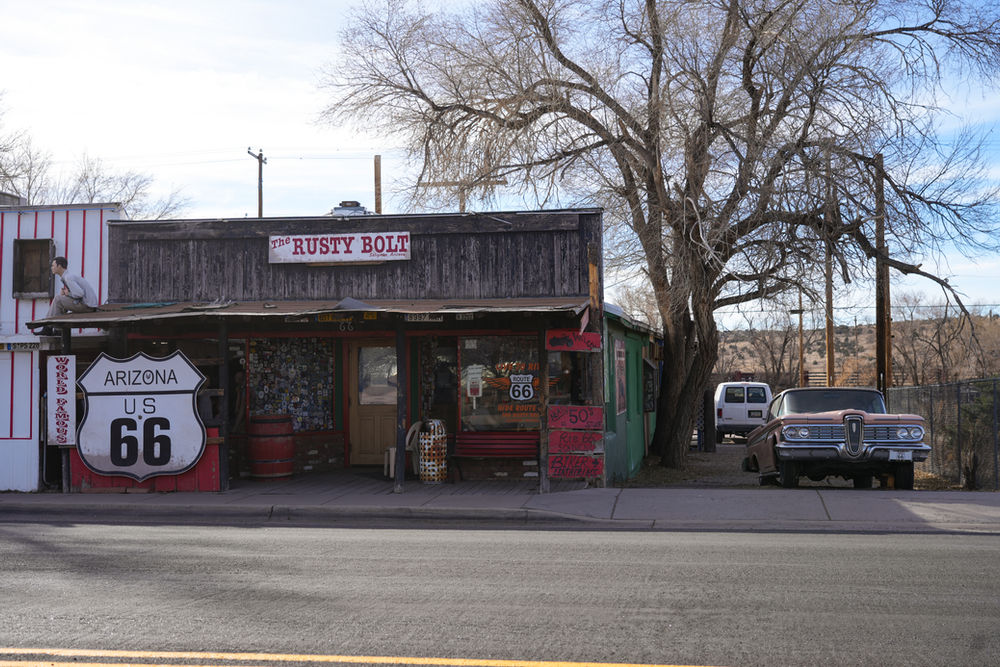
This is part two of three from a single journey: ten days and 1,645 kilometres from Las Vegas through Nevada, Utah and Arizona and back, between the end of December and the first week of January. Part one covers Las Vegas, the Valley of Fire and Zion; part two Page, Antelope Canyon and Monument Valley on horseback; part three the Grand Canyon in winter and Route 66 down to Oatman.
We left Springdale after a last morning in Zion and drove east, out through the tunnel and the slickrock on the far side of the park, then down through Kanab towards Page. It is a short day on paper — about 190 kilometres — but it is the drive where the landscape changes character completely, from canyon walls to open red plateau.

Lower Antelope Canyon: book it early, and accept the crowd
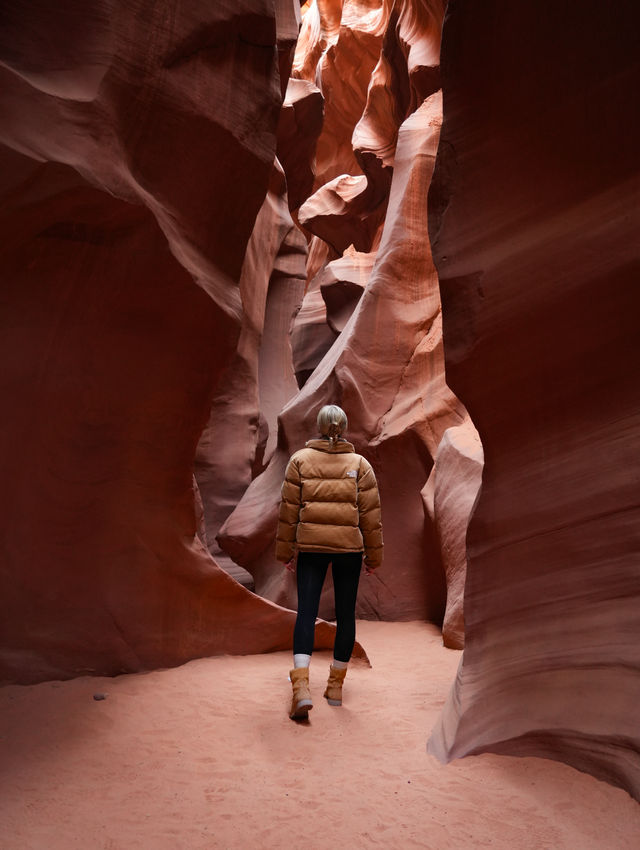
Antelope Canyon is on Navajo land and you cannot walk in on your own: access is only with an authorised guided tour, booked directly with one of the operators. We had the three o'clock slot, with compulsory check-in forty-five minutes before — that is not a suggestion, and arriving late means losing the tour.
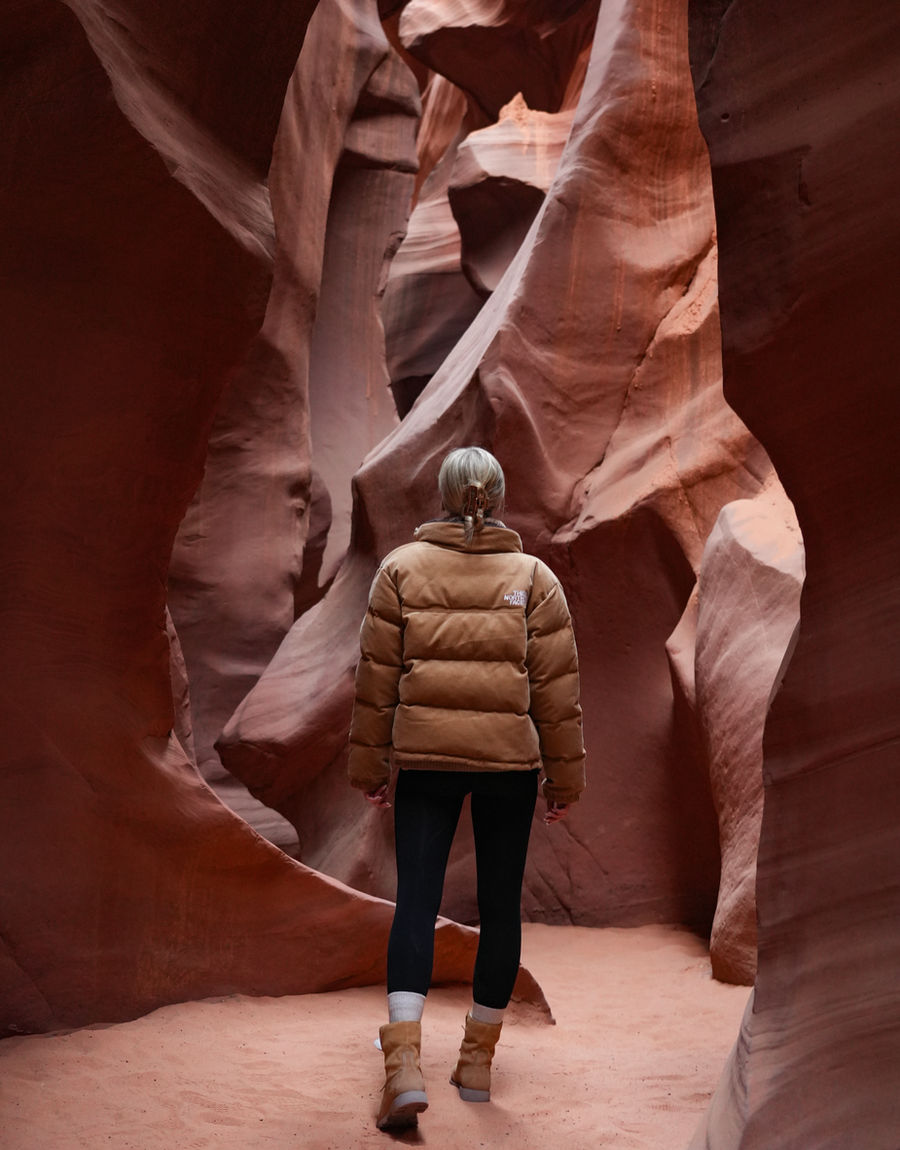
Book as far in advance as you can. Slots for the good hours disappear months ahead, and over the holidays they go faster still. And then prepare yourself for the other half of the truth: it is busy. Very busy. You walk in a line, you go down steel ladders in a queue, and there is a group ahead of you and another behind.

It is worth it anyway. The rock inside is not really rock any more — it is a wave, sculpted by flash floods into curves that look poured rather than carved, and the light drops in from above and changes colour as it goes down the walls. No photograph prepares you for the scale of the thing, and no crowd quite ruins it.

- Only with an authorised guide: book directly with an operator, months ahead if you can
- Check in 45 minutes before your slot
- Bags are not allowed inside — leave everything in the car
- Lower Antelope means ladders: comfortable shoes, hands free
Horseshoe Bend, and the rule about crowds
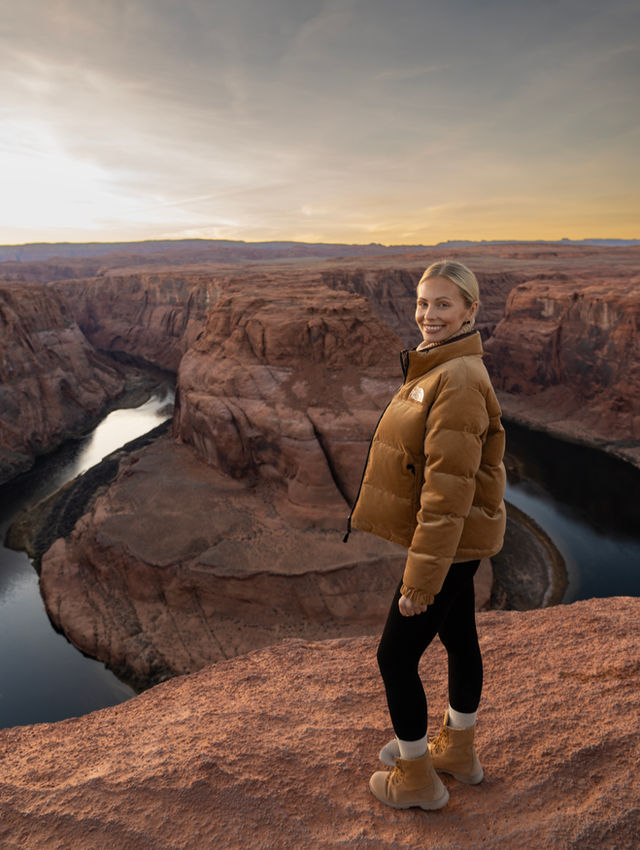
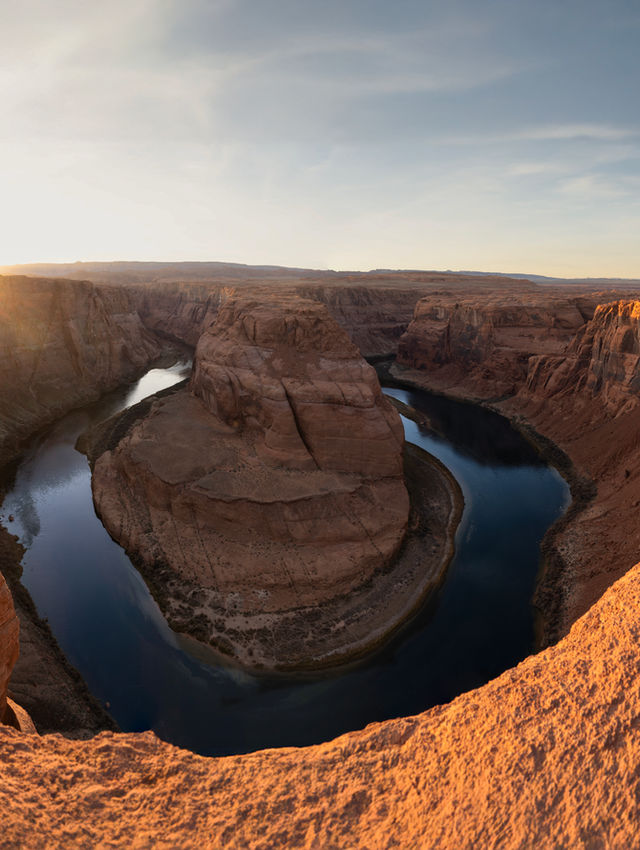
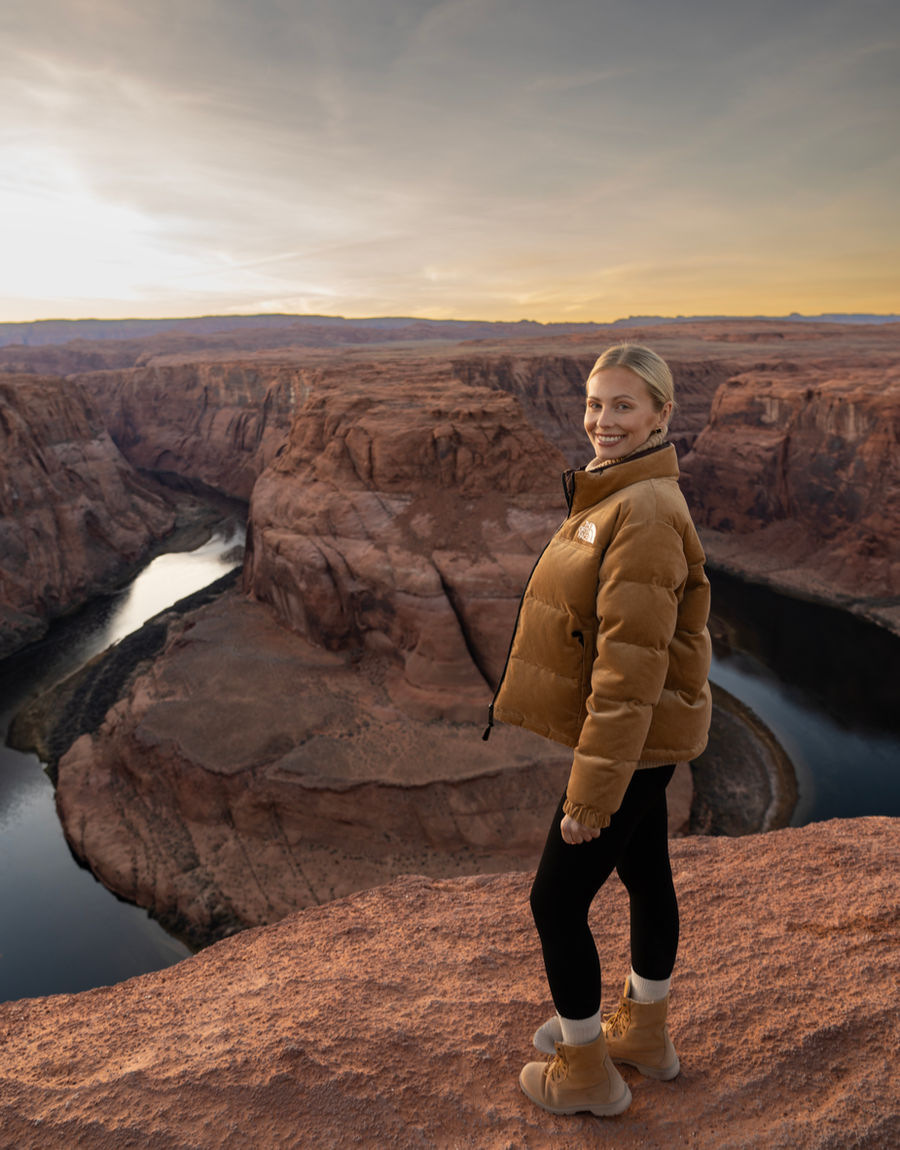
Ten minutes south of Page, the Colorado makes a bend so perfect it looks designed. The viewpoint is a flat walk of about a kilometre from the car park, and that single fact explains everything about the experience: it is full of people, all day, every day.
It is the pattern we noticed all week and it is worth saying plainly: where you can arrive from the car park, you find a crowd. Where you have to walk for an hour, you find nobody. At Zion, on a trail of eleven kilometres, we were alone. Here, on one flat kilometre, we shared the rim with a hundred people. The view is spectacular either way — the drop to the water is around three hundred metres and there is no railing for most of it — but if you want it quiet, come at first light.

The drive to Monument Valley: better than the destination
The next morning we drove from Page towards Monument Valley, about two hundred kilometres, and this is the stretch I would keep if I had to throw away everything else. Highway 163 runs straight through open country with the buttes standing up out of nothing on the horizon, growing for half an hour before you reach them.

For once the journey genuinely beats the arrival. The landscape is so unreasonably beautiful that we stopped constantly and arrived far later than planned, and I would do exactly the same again.
On horseback through Monument Valley
This was the best thing we did on the whole trip, and I did not expect it to be. We booked a ninety-minute ride with a Navajo-run outfit, meeting at the Monument Valley KOA on the US-163, with the waiver signed in advance and instructions to arrive forty-five minutes early.
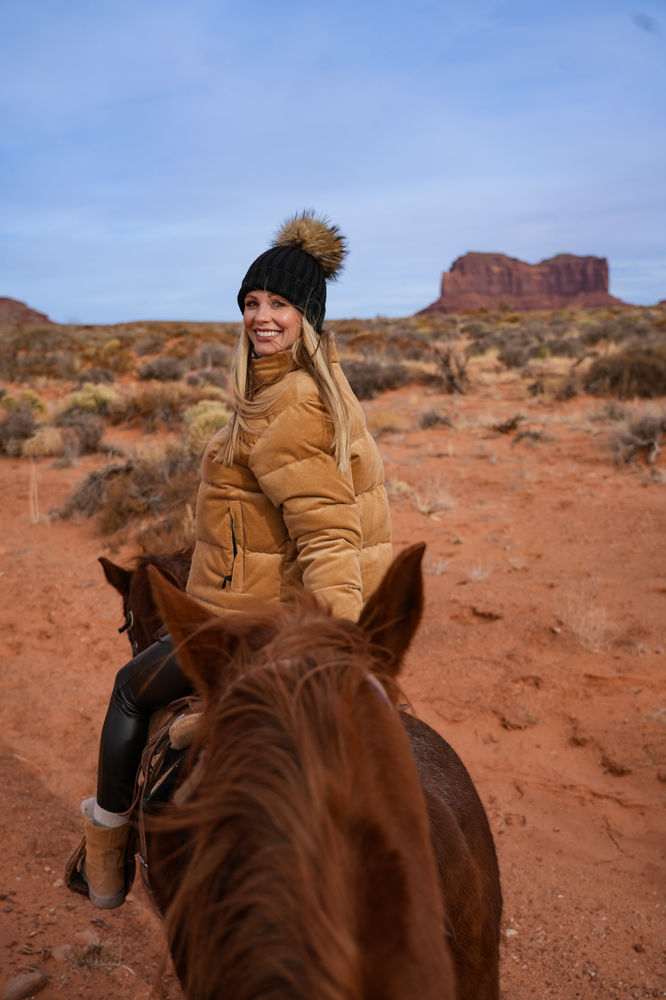
You can drive the valley loop in a car, and most people do. On a horse it becomes something else entirely. You move at the speed the place was made for, there is no engine noise, the sand is under the hooves, and the buttes turn slowly around you. The sense of freedom is enormous — for an hour and a half it genuinely felt like being inside a western, and I mean that as more than a figure of speech.

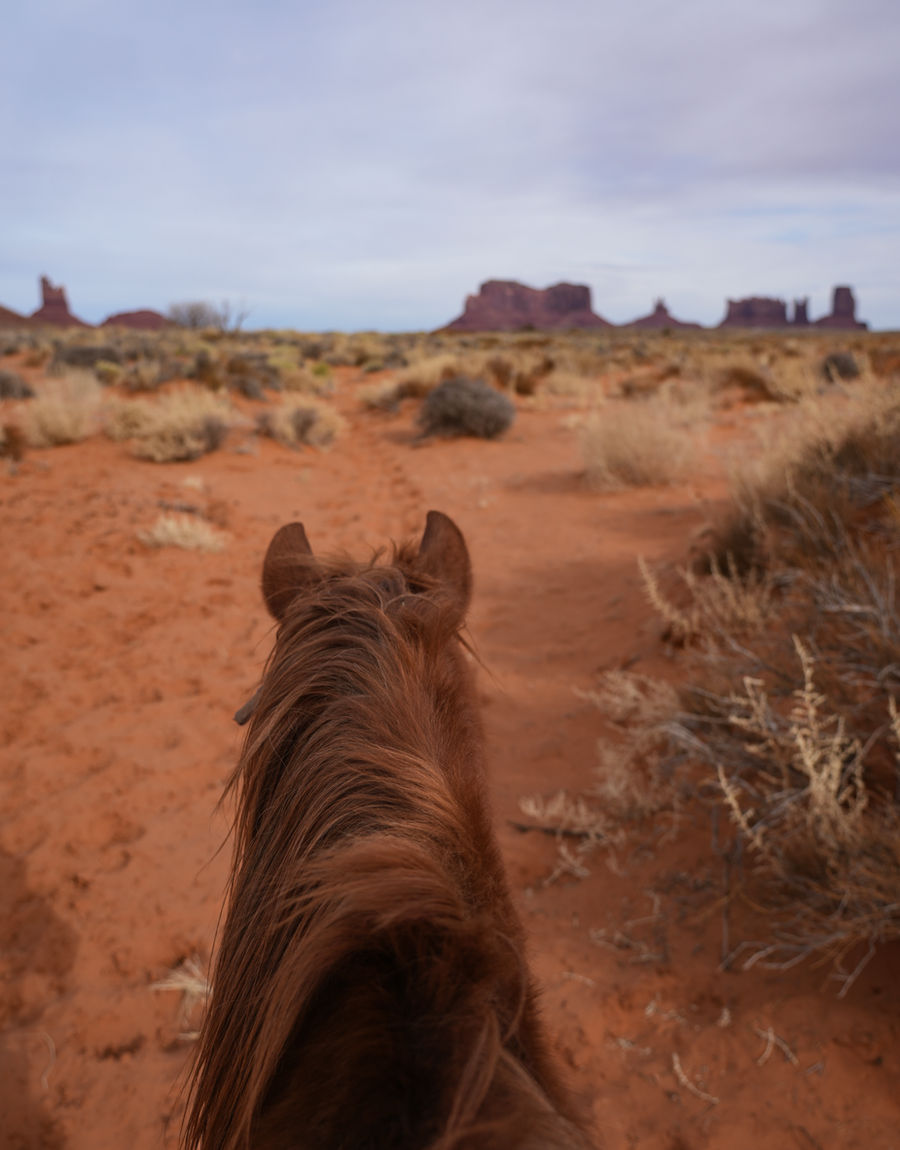
The practical rules are strict, and they come from the Navajo Tribal Park rather than from the operator: no luggage, no tripods, no selfie sticks, no monopods, no GoPro. The times are fixed. If the guides cancel for weather you are refunded in full. Take a phone in a pocket and nothing else.

Bluff, and why we did not sleep at the View
Instead of staying inside the park we drove another forty-five minutes north-east to Bluff, in Utah, and I would repeat that choice. Bluff is beautiful: a tiny town under red cliffs, a handful of buildings, the sandstone going pink at the end of the day and nothing else happening at all.

We stayed in a cabin at the Desert Rose. One warning: the hotel restaurant closes for the winter, and Bluff is not a place with alternatives on every corner, so arrive with dinner sorted or plan to eat before you get there.


In short
- Springdale → Page: about 190 km, through the east side of Zion and Kanab
- Page → Monument Valley: about 200 km on the US-163, the best driving of the trip
- Monument Valley → Bluff: about 75 km
- Lower Antelope Canyon: guided tour only, check in 45 minutes early, book months ahead
- Horse ride: 90 minutes, Navajo-run, no bags and no camera gear beyond a phone
- Horseshoe Bend: a flat kilometre from the car park, so come early if you want it to yourself
Part three closes the loop: the Grand Canyon in winter, then Route 66 west through Seligman and Hackberry to Oatman, where the donkeys walk down the main street.